From China to Europe: The Expansion Challenges of BYD Electric Vehicles
As the world's largest electric vehicle (EV) manufacturer, BYD is facing the severe challenge of an imbalance between production and sales. The latest data from data service provider Marklines shows that BYD's performance in the domestic Chinese market is sluggish, with inventory pressure continuing to rise.
In the first quarter of 2025, the overall sales volume of China's electric vehicle market surged by over 45%, while BYD only achieved a 5.5% increase. Previously, the company, through continuous expansion of production, surpassed Tesla in early 2024 to become the world's largest electric vehicle producer and exceeded Volkswagen in sales volume in the Chinese market.
However, the company's sales target of 5.5 million vehicles set for 2025 is hard to reach. By the end of May, inventory had accumulated to over 340,000 vehicles, far exceeding the level of the entire year of 2024.
To address this predicament, BYD has adopted two major strategies. First, it has significantly reduced prices to compete for market share in the domestic market, attempting to suppress competitors with a low-price strategy, which has, however, sparked widespread controversy in the industry.
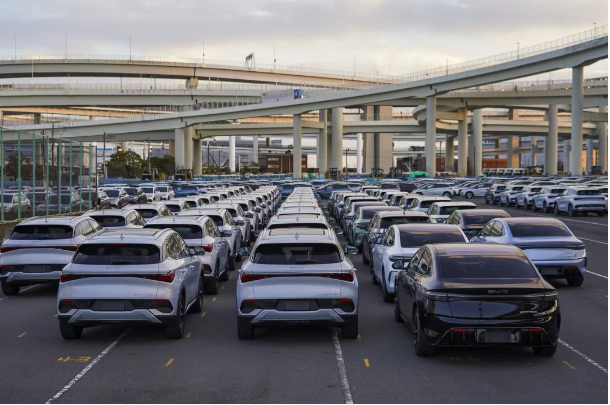
Second, the company has accelerated its overseas market layout in an effort to absorb excess capacity. In March 2025, founder Wang Chuanfu announced plans to double the export volume in 2025 to over 800,000 vehicles. However, some export methods have been questioned for allegedly circumventing rules.
Production Adjustment and Market Pressure
In May 2025, BYD produced 318,530 vehicles, a year-on-year decrease of 2.6%. Previously, the company had continuously expanded production until it began to reduce output in April. May marked the second adjustment within the year, following a brief reduction in February. In June, production slightly increased by 1%, according to an announcement released by the company on the Hong Kong Stock Exchange.
However, the inventory pressure on dealers is significant. Data from the China Automobile Dealers Association (CADA) shows that by the end of May, the average inventory cycle for BYD dealers reached 3.21 months, the highest in the industry. A large dealer in Shandong Province even closed more than 20 branches, highlighting the severity of the market downturn.
BYD has remained silent on the inventory issue, but actions have been quietly taken. According to insiders, the company has canceled night shifts at several factories, suspended expansion plans, and cut production on some assembly lines by as much as one-third.
Meanwhile, domestic competitors are performing strongly. Technology company Xiaomi launched the new SUV YU7, which received 289,000 pre-orders in the first hour. Priced lower than Tesla's Model Y and BYD's Tang, it has a range of 760 kilometers and is expected to account for 41% of Xiaomi's deliveries in the second half of the year.
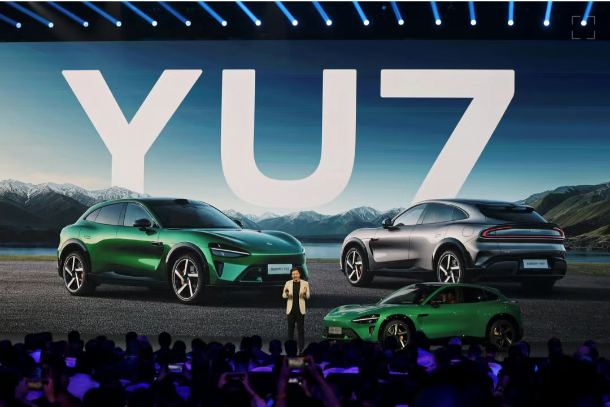
In the first quarter of 2025, sales of Xiaomi's electric SUVs surged by 22,000% year-on-year, while XPeng, Geely, and Chery increased by 300%, 160%, and 115%, respectively, far exceeding BYD.
Price War and Industry Controversy
In a bid to capture the market, BYD has reduced the price of its entry-level model, the "Seagull" (Möwe), to around €6,800, well below the industry average. Yin Tongyue, chairman of Chery, criticized such significant discounts as "drinking poison to quench thirst," without naming BYD but clearly targeting it.
Wei Jianjun, founder of Great Wall Motor, compared it to "China's Evergrande in the automotive industry," implying that the low-price strategy could trigger financial risks similar to those of the real estate giant. In June 2025, Ningde Times' Chief Manufacturing Officer, Ni Jun, warned at a conference in Tianjin that continuous price reductions could squeeze out smaller competitors, and without regulatory intervention, the industry could fall into a vicious cycle.
Opportunities and Questions of Overseas Expansion
To absorb inventory, BYD has accelerated its overseas layout. Vice Chairman Li Ke announced plans to invest 20 billion in Europe, covering logistics, sales networks, showrooms, and the construction of a new factory in Hungary.
The company owns six cargo ships, with the "BYD Xi'an" carrying 70,000 vehicles to the UK, Italy, Spain, and Belgium. Cumulative exports have exceeded 70,000 units, controlling the global supply chain from batteries to transportation.
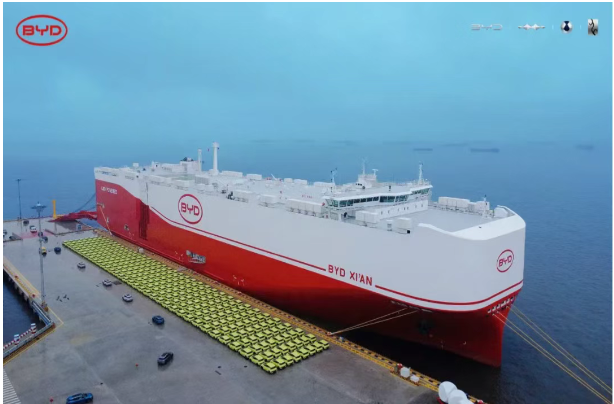
However, the export strategy has sparked controversy. BYD uses a "zero-kilometer vehicle" operation, briefly registering vehicles in China to disguise them as second-hand cars to avoid overseas new car tariffs. More than 20 local governments support this practice, providing special permits and tax incentives.
In June 2025, relevant media criticized this as a "disguised price reduction," warning that it could lead to a vicious cycle in the industry. The Ministry of Industry and Information Technology also asked BYD to improve payment conditions for suppliers to maintain fair competition.
Despite expanding showrooms in South Africa and West Africa, the European market performance is mixed. In the UK, sales are close to Tesla's, with nearly 15,000 units sold from January to May. However, in Germany, sales mainly rely on rental companies and own registrations, with only 128 units sold to private customers (according to Dataforce data in May).
Quality issues, such as mold and manufacturing defects, have improved. However, Lars Bialkowski, the head of the German branch, needs to push for the construction of 120 sales points (currently only 27) to boost the private market.
A former BYD executive admitted that the low-price strategy does not match the positioning of the German market. The company is more like a high-end brand rather than a mass supplier, and it will be difficult to relieve inventory pressure in the short term.


