Is the - 40°C extreme cold environment driving testers crazy?
By Wuliru
July 28th, 2025
227 views
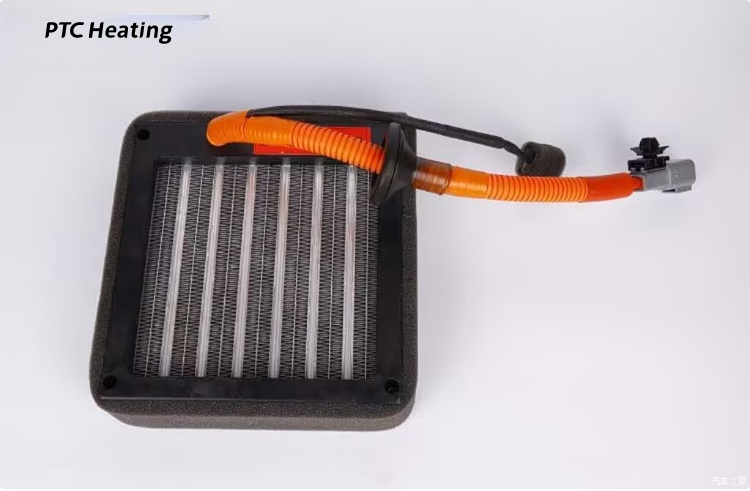
Is the - 40°C extreme cold environment driving testers crazy?After this Auto Home New Energy Super Test, we found that the air - conditioning logic of different vehicles is really quite different. We set the driving mode of the vehicles to the most economical mode and the air - conditioning temperature to 23°C with the fan speed on AUTO. Some vehicles can still maintain an interior temperature of 30°C in the - 30°C extreme cold environment, while some vehicles' interior temperatures never rose above 0°C during the entire range test, freezing the testers quite a bit. Why is there such a big difference in heating effects among electric vehicles?Before exploring this question, let's first discuss the factors affecting the interior temperature that were revealed in this super - test.Firstly, the energy type leads to differences in interior temperature. In this super - test, we can see that there is still a significant difference in temperature performance between hybrid and pure - electric models. In extremely cold environments, the average interior temperature when exiting hybrid vehicles after a pure - electric range test is around 19°C, while for pure - electric vehicles, it is around 14°C. I speculate that this is because the battery capacity of electric vehicles is fixed, making it difficult to balance between range and heating capabilities. Hybrid vehicles don't have to worry about range; when the electricity runs out, they can switch to fuel, so they can use the vehicle's electricity for heating without any concerns.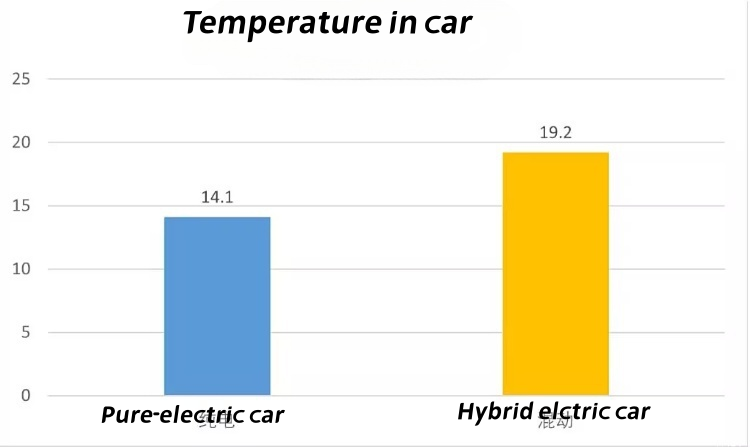 The second factor is the air - conditioning system. There are now two mainstream types of air - conditioning systems - heat pump air - conditioning and PTC air - conditioning. The heat pump air - conditioning system, which has become increasingly popular with the growing prevalence of electric vehicles, is something everyone is familiar with. To put it simply, its working principle is to "pump" the heat from outside the vehicle into the cabin. Speaking of which, there is a concept I want to clarify with everyone: all objects have heat. Even in extremely cold areas with temperatures below zero, there is still heat, which can be transported into the cabin through the compressor. Only at absolute zero (- 273°C) is there no heat. The working principle of PTC air - conditioning is simpler and more straightforward; it generates heat by itself, similar to a hairdryer at home. Therefore, its power consumption is much higher than that of a heat pump, which only needs to start the compressor, and it has a greater impact on the range of electric vehicles.I believe that by now, most of you understand that a heat pump air - conditioning system is not just a comfort feature; its most direct advantage is energy - saving!
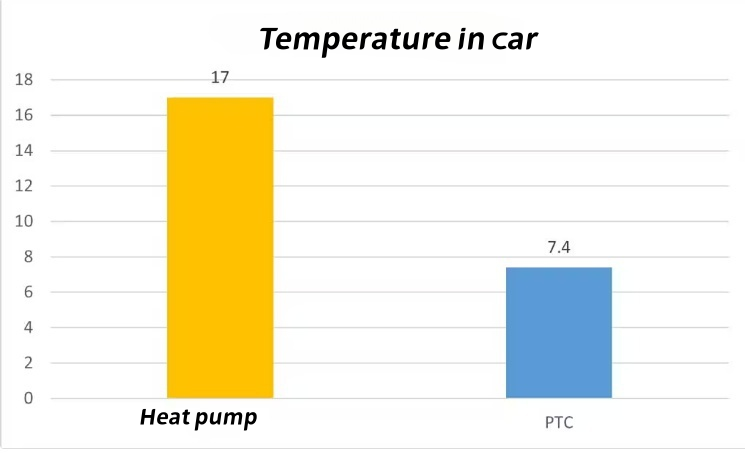 However, why in this Auto Home New Energy Super Test in the extreme cold zone, the average interior temperature of vehicles with heat pump air - conditioning was 17°C, while for vehicles without heat pump air - conditioning, the average interior temperature was only 7.4°C, with a difference of nearly 10°C between the two types of air - conditioning? In fact, most vehicles equipped with heat pump air - conditioning also have a PTC system. The reason for their higher average interior temperature may be the result of the combined operation of heat pump and PTC. Moreover, since our test driving mode was the most economical, it is natural that vehicles with more energy - saving heat pump air - conditioning have an advantage. I also have a guess that because the production cost of heat pump air - conditioning is higher, vehicles equipped with it may have better cabin sealing and more thermal insulation materials, among other reasons.
 The third factor is the official range of pure - electric models. Some friends may ask, "What does interior temperature have to do with range?" We took the official CLTC range of 500km as a watershed and found that models with an official CLTC range above 500km had an average interior temperature of 16.2°C when exiting the vehicle, while vehicles with a range below 500km had an average interior temperature of 4.7°C.
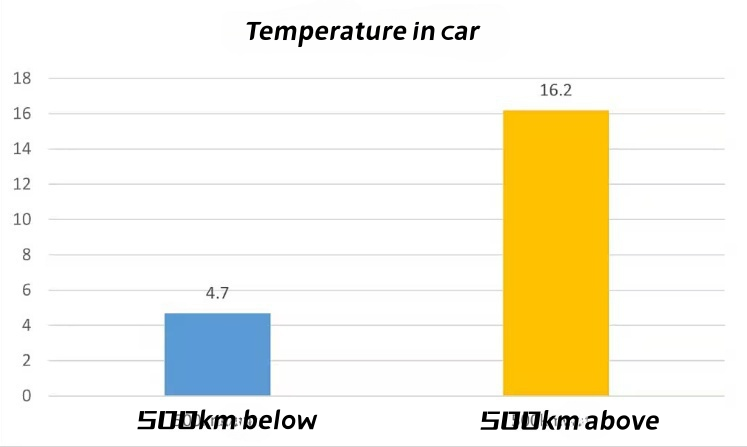 It can be seen that there is still a significant temperature difference between vehicles with smaller ranges and those with larger ranges. I can understand and agree with the temperature difference caused by range, because in extremely cold environments, the actual range of pure - electric vehicles will be greatly reduced anyway. If the remaining electricity is still used for heating without any consideration, it will inevitably have a great impact on the normal use of the vehicle. Two very vivid examples are the BYD Seagull and Wuling Binying, with interior temperatures of - 4.4°C and - 9.4°C respectively when exiting the vehicle.
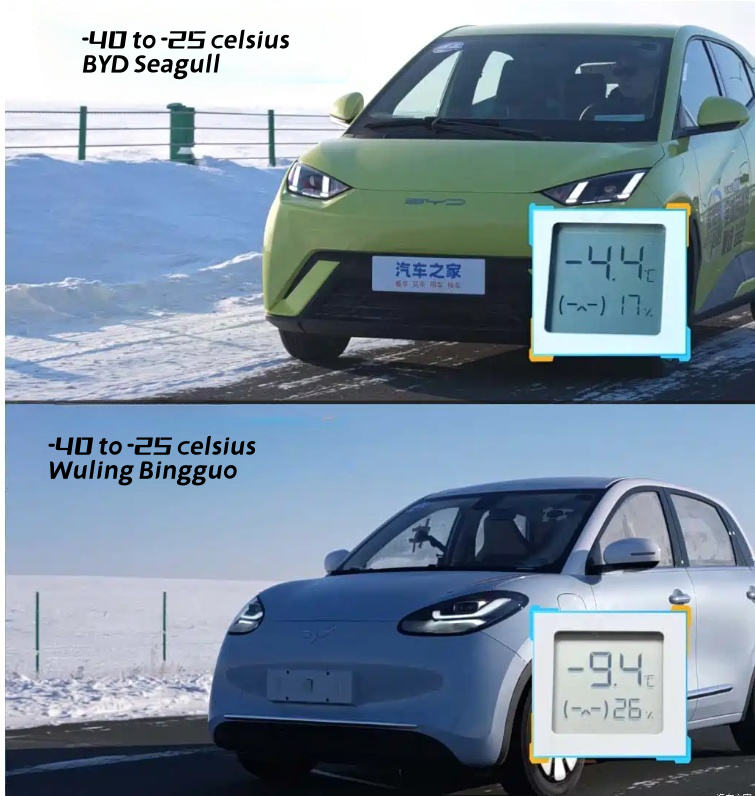 These two vehicles really gave our testers a hard time, but considering the battery capacity and range of the vehicles themselves, extremely cold environments are indeed not suitable for these two vehicles. Therefore, for car friends living in the north, if you want a more comfortable trip, it is better to choose an electric vehicle with a larger range.
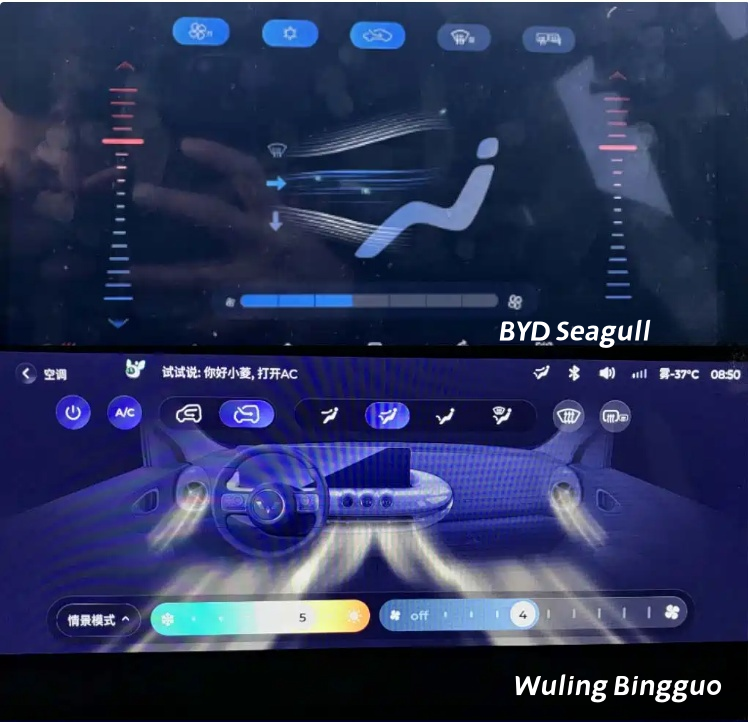 Both of these vehicles are equipped with manual air - conditioning, and the heating and fan settings are as shown in the figure, so it is not excluded that the insufficient heating capacity is due to our air - conditioning settings.Another factor is the air - conditioning logic. To put it simply, when the vehicle is in a low - battery state, does the vehicle choose to maintain the interior temperature or the range? In this super - test, we found that most electric vehicle models will reduce the air - conditioning power in a low - battery state to ensure the range. Only one brand stands out, which is Tesla.The Tesla Model 3 and Model Y that participated in this test both reached an interior temperature of over 30°C when exiting the vehicle in the - 30°C extreme cold environment. This means that as soon as the driver gets out of the car, they will feel the penetrating cold caused by the 60°C temperature difference. But is such an aggressive heating logic really reasonable?
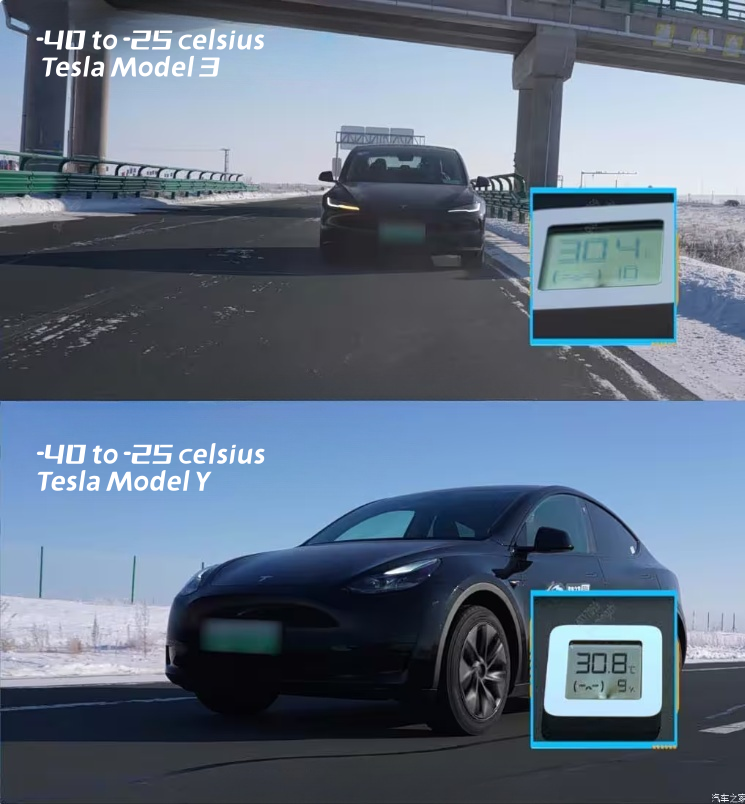 In my opinion, Tesla's heating logic is a bit too aggressive, because even the heat pump air - conditioning has an undeniable impact on range. Excessive heating will inevitably cause a great loss to the vehicle's range. Moreover, our air - conditioning temperature setting is 23°C, but the actual interior temperature when exiting the vehicle is 30°C, which indicates that your interior temperature control is not precise enough. As everyone knows, the end standard of our range test is to have the remaining battery and range displayed in the vehicle to zero, or the power is significantly limited. The high interior temperature of Tesla when exiting the vehicle also indicates that the vehicle has chosen comfort over range without hesitation.In addition to Tesla, another model worth mentioning is the GAC Trumpchi E9. This vehicle did not participate in the extreme cold range test of this super - test because the vehicle can only turn on the air - conditioning in hybrid mode in extremely cold environments, which does not comply with the range test rules of this test.Objectively speaking, this calibration is more in line with the logic of daily use, because in this way, the heating of the air - conditioning can rely on the heat of the engine, and the electricity can be used more for driving, thus achieving the effect of reducing fuel consumption.Of course, for electric vehicles, there are many factors that determine the interior temperature, such as the cabin volume and cabin sealing, etc. However, I will not elaborate on the factors that cannot be directly seen in the temperature difference in this super - test.I believe that after reading this, many of you may have a question: "It's not good if the temperature is low, and it's also not good if the temperature is high. So, what is the appropriate interior temperature?" My answer is that the interior temperature should be as close to the air - conditioning setting temperature as possible.We sorted out the interior temperatures of pure - electric vehicles in the four temperature zones of the super - test and found that only in the cold temperature zone of Beijing and the damp cold temperature zone of Ningbo, the average interior temperature when exiting the vehicle was controlled within ± 2°C of the air - conditioning setting temperature. This means that the temperature control of vehicles in these two temperature zones is the most reasonable. In addition, we also found a model that stands out in temperature control - the NIO ES8. In the tests of the four temperature zones of this super - test, the interior temperature when exiting the vehicle was controlled within 23°C ± 2°C.With the fierce competition in the electric vehicle industry, everyone is trying to reduce energy consumption and ensure range by competing on factors such as drag coefficient, 800V high - voltage platform, and electric control technology. However, it seems that the competition in the air - conditioning aspect is only focused on heat pump air - conditioning. I believe that if the interior temperature control is more precise and there is no excessive heating or cooling, every degree of electricity can be fully utilized, which will greatly improve the range of electric vehicles.
Previous
Wuling Guang EV 305km Progressive Model Launched
Read More
Next
The new model of Changan UNI-K has been officially launched.
Read More


